Autumn is arguably the easiest season to build genuine nature study around, not because it requires more effort than spring or summer, but because it does the opposite: it puts change on display everywhere at once, in a way that is almost impossible to miss even on a short walk to the shops.
This guide pairs real British wildlife you can realistically spot this autumn with home education activity ideas built around each one, and a short note on what every activity actually demonstrates, so a good afternoon outdoors becomes part of your records almost without trying.
The best nature study doesn't need a nature reserve. A single street tree changing colour over three weeks teaches more about the seasons than any worksheet could.
Why autumn is such a rich season for nature study
Between September and November, trees change colour and drop their leaves, fungi appear almost overnight after rain, hedgerows fill with berries and nuts, summer birds leave for warmer countries while winter visitors arrive from the Arctic and Scandinavia, and animals visibly start preparing for the colder months ahead.
None of this requires specialist knowledge to notice. It only requires being outdoors reasonably regularly and paying a little attention, which makes autumn one of the most naturally rewarding seasons to build a run of nature-based evidence into your records.
What to Spot This Autumn
Fungi & Toadstools
Damp woodland and grass verges after rain, look but never touch
Fallen Leaves & Conkers
Oak, beech, and horse chestnut turning colour and dropping
Migrating Birds
Swallows heading south, redwings and geese arriving
Hedgerow Berries
Blackberries, rosehips, sloes, and hawthorn haws ripening
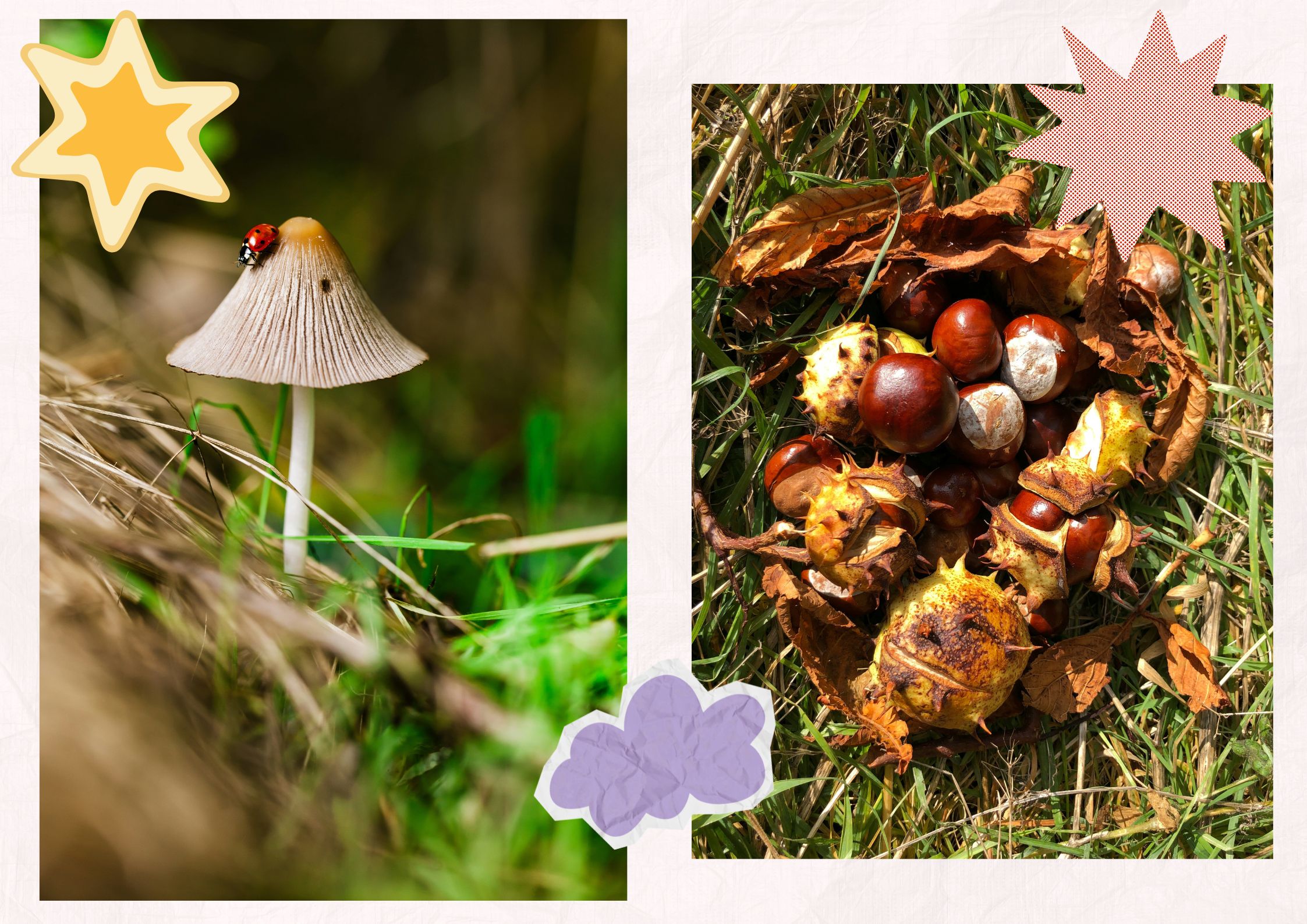
Fungi and fallen leaves worth a closer look
Woodland edges, grass verges, and even lawns produce a surprising range of fungi through September and October, especially after a spell of rain. Trees put on their most visible show of the year as chlorophyll breaks down and leaves turn yellow, orange, and red before falling.
A fungi photo ID walk. Photograph any fungi you spot, at a safe distance, and try to identify them later using a book or app.
What this demonstrates: observational science, classification skills, and safety awareness, since fungi should always be looked at and never touched, picked, or tasted without an adult confirming what it is.
Leaf collecting and pressing. Gather a few fallen leaves from different tree species and press them, then identify each tree using its leaf shape.
What this demonstrates: botany, categorisation skills, and fine motor practice through pressing and arranging.
Conker collecting, sorting, and a game. Collect conkers, sort them by size, weight, or shininess, then thread and play a simple game of conkers.
What this demonstrates: early maths through sorting and comparing, plus basic physics concepts like force and momentum through the game itself.
Migrating and overwintering birds
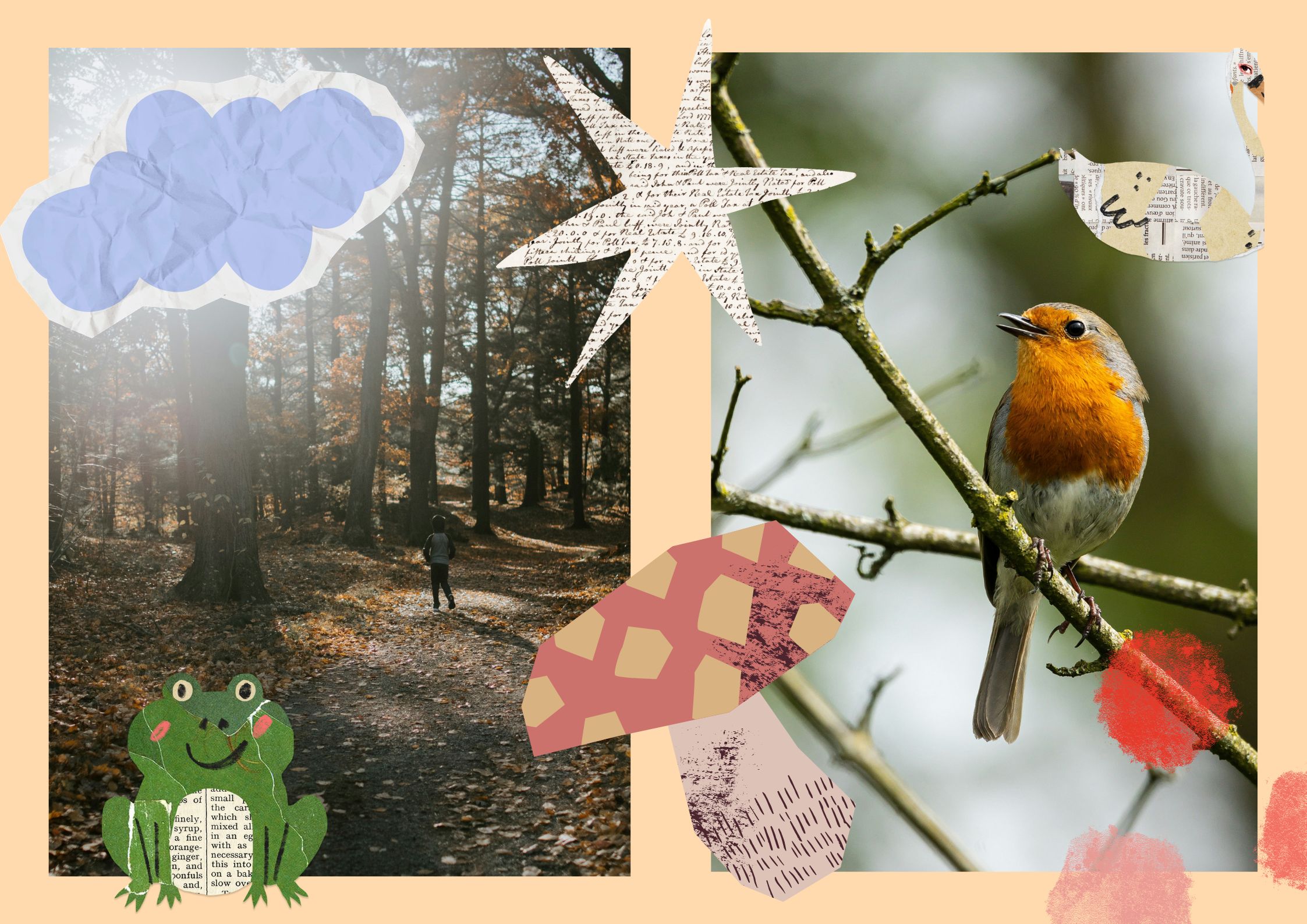
Autumn is a genuine turning point for British birdlife. Swallows and house martins that spent the summer here begin their journey to Africa from September, while redwings, fieldfares, and geese arrive from Scandinavia and the Arctic to spend the winter in the UK.
A garden or park bird count. Spend ten minutes at the same time each week noting down every bird species seen or heard.
What this demonstrates: observation skills, simple data recording, and an ongoing dated record built up over the term.
A simple migration map. Mark on a world map where a spotted species, such as a swallow, might be heading, and talk through why birds migrate at all.
What this demonstrates: geography, reasoning and discussion skills, and an introduction to animal behaviour.
Hedgerow berries, nuts, and a safety note
British hedgerows are genuinely productive in autumn: blackberries ripen from late August, followed by elderberries, rosehips, sloes, and hawthorn haws, alongside acorns, hazelnuts, and sycamore seeds.
Blackberry picking and a simple recipe. Pick blackberries together, then wash and use them in a simple crumble or jam, measuring and following the steps as a family.
What this demonstrates: practical life skills, measuring and following a sequence, and a real-world use for something foraged outdoors.
A safety note worth taking seriously: not every hedgerow berry is safe, and several common UK plants, including deadly nightshade and yew, produce berries that are genuinely toxic. The rule worth teaching from the very first walk is simple, look and photograph, but never eat anything foraged without an adult confidently identifying it first, and never rely on a single photo app for a certain identification.
Look
- Photograph fungi and berries to identify later at home
- Use a trusted field guide or app to name what you've found together
- Notice colour, shape, and where something is growing
- Wash hands after handling anything from the hedgerow
Don't Eat
- Any fungus found on a walk, even ones that look familiar
- A berry just because a bird has been seen eating it
- Anything picked or tasted without an adult checking it first
- Anything identified from a single photo app alone
Spiders, webs, and squirrels preparing for winter
Cooler, dewy autumn mornings make spiderwebs suddenly visible across hedgerows and gardens, while grey squirrels become noticeably busier as they cache food for the winter ahead.
Dew-covered spiderweb spotting. On a cool, damp morning, look for spiderwebs outlined in dew on hedges, fences, and long grass.
What this demonstrates: patience and observation skills, and an introduction to basic biology and web structure.
Watching squirrels cache food. Spend a few minutes in a park or garden watching squirrel behaviour, and talk through what caching is and why it happens.
What this demonstrates: animal behaviour and discussion skills, plus an early introduction to hypothesis and prediction.
Keeping a simple nature journal
A nature journal turns all of the above from a series of one-off outings into an ongoing, dated record. A weekly entry doesn't need to be elaborate, a drawing or photo and a sentence or two about what was noticed is enough to build a genuinely rich picture of the season over a full term.
Records don't need to be created after the fact. The easiest nature journal entries are the ones written outdoors, while the moment is still fresh.
A term's worth of autumn nature study at a glance
| Activity | Best time | What it demonstrates |
|---|---|---|
| Fungi photo ID walk | September to November, after rain | Observational science, classification, safety awareness |
| Leaf collecting & pressing | October to November | Botany, categorisation, fine motor skills |
| Conker collecting & game | September to October | Sorting, early maths, basic physics |
| Garden bird count | September to December | Observation, data recording |
| Blackberry picking & baking | Late August to September | Life skills, measuring, sequencing |
| Spiderweb & squirrel watching | October to November | Patience, animal behaviour, prediction |
Trusted places for autumn wildlife identification
- The Woodland Trust for free tree and leaf identification guides
- The RSPB for bird identification and seasonal migration information
- The Wildlife Trusts for local nature reserves and seasonal spotting guides
- Forestry England for family-friendly woodland walks and fungi safety advice
- Seek by iNaturalist, a free app for identifying fungi, plants, and wildlife from a photo
Turning a nature walk into evidence without extra work
Every activity above is naturally rich in evidence, but only if it gets captured somewhere. A quick photo, a one-line note, or a dated journal entry takes seconds outdoors and becomes genuinely useful later, when it's time to show a broad, engaged picture of your child's learning.
Little Folio was built exactly for this. Log an activity, attach a photo, and it is dated and stored automatically, so a term of autumn nature walks turns into a ready-made record without a separate task at the end of the week.
Start your free trial of Little FolioFrequently asked questions
Do we need special equipment for autumn nature study?
No. A phone camera, a notebook, and a willingness to get outdoors in cooler weather are enough for almost everything in this guide. A field guide or identification app is useful but not essential to get started.
Is it safe to pick berries and fungi with children?
Picking and photographing is fine with normal care, but eating anything foraged should only happen after an adult has confidently identified it. Several common UK hedgerow and woodland species, including deadly nightshade and yew berries, are genuinely toxic, so the safe habit to build from the start is look and identify, never taste on a guess.
How do I turn a nature walk into evidence for my home education records?
A quick photo taken at the time, paired with a short dated note of what was spotted and briefly why it mattered, is enough. Captured in the moment, this becomes a simple ongoing record rather than something to reconstruct later from memory.
What if we live in a city with limited access to green space?
Most of these activities need very little: a single street tree, a small local park, or even a balcony can show leaf colour change, spider webs, and common garden birds. Autumn's seasonal change is visible almost anywhere in the UK, not only in the countryside.
Do nature study activities count towards a suitable education?
Yes. Suitable education is a broad legal standard covering education appropriate to a child's age, ability, and aptitude. A varied set of nature-based activities, recorded consistently over a term, contributes to a strong, broad picture of that education.
What age groups is autumn nature study suitable for?
All of them. Younger children benefit from sensory exploration, like touching leaves or conkers, while older children can take on more structured tasks, such as species logging, migration mapping, or a written journal entry.
Further reading
- Home education activities by key stage: a UK parent's guide
- What records do home educators need to keep in England
- How to start homeschooling in the UK, your first term roadmap
Little Folio is a record-keeping app built for home educating families in England. Log activities, store evidence, manage Local Authority correspondence, and generate professional reports in one place.
Last updated: August 2026. This post is for information only and does not constitute legal advice. Verify against current official guidance and seek independent advice for your specific circumstances.